
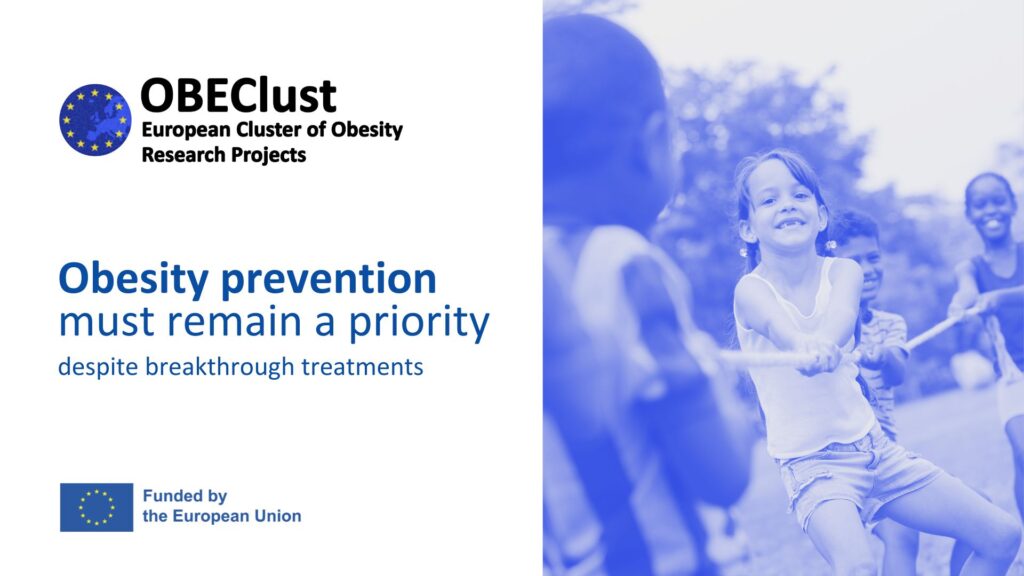
OBEClust collaboration highlights the need for structural action alongside GLP-1 therapies
A new position paper published in The Lancet Regional Health – Europe calls for renewed and
sustained investment in obesity prevention, warning that advances in pharmacological treatments must not divert attention from the root causes of the epidemic.
Endorsed by a pan-European team of over 700 researchers within the OBEClust initiative, the paper argues that while GLP-1 receptor agonists (such as Wegovy and Ozempic) represent a major breakthrough in obesity treatment, they cannot address the structural drivers underpinning rising obesity rates.
Obesity affects over one billion people globally and continues to increase across Europe, driven by factors including unhealthy food environments, urban design that discourages physical activity, socioeconomic inequality, and commercial determinants of health.
“Pharmacological treatments can improve health outcomes for individuals, but they have
considerable disadvantages and do not remove the root causes of obesity,” says Dr. Jeroen
Lakerveld from Amsterdam UMC, one of the paper’s lead authors. “Without structural change, the inflow of new patients will remain high. Prevention is essential for achieving sustainable and equitable health improvements at the population level.”
The paper outlines key policy priorities, including:
- Strengthening food system regulation
- Promoting active environments
- Addressing socioeconomic inequalities
- Integrating prevention and treatment strategies
It also highlights the economic risks of relying heavily on long-term pharmacotherapy without
addressing underlying causes, warning of escalating costs for health systems.
OBEClust supports the paper’s call for coordinated, cross-sector action to prioritise prevention while ensuring access to effective treatment.
The authors conclude that the emergence of new therapies should reinforce – not replace – the case for prevention.
You can read the full paper here and access the press release here.